Below the Surface:
A closer look at my experiences in marine science.
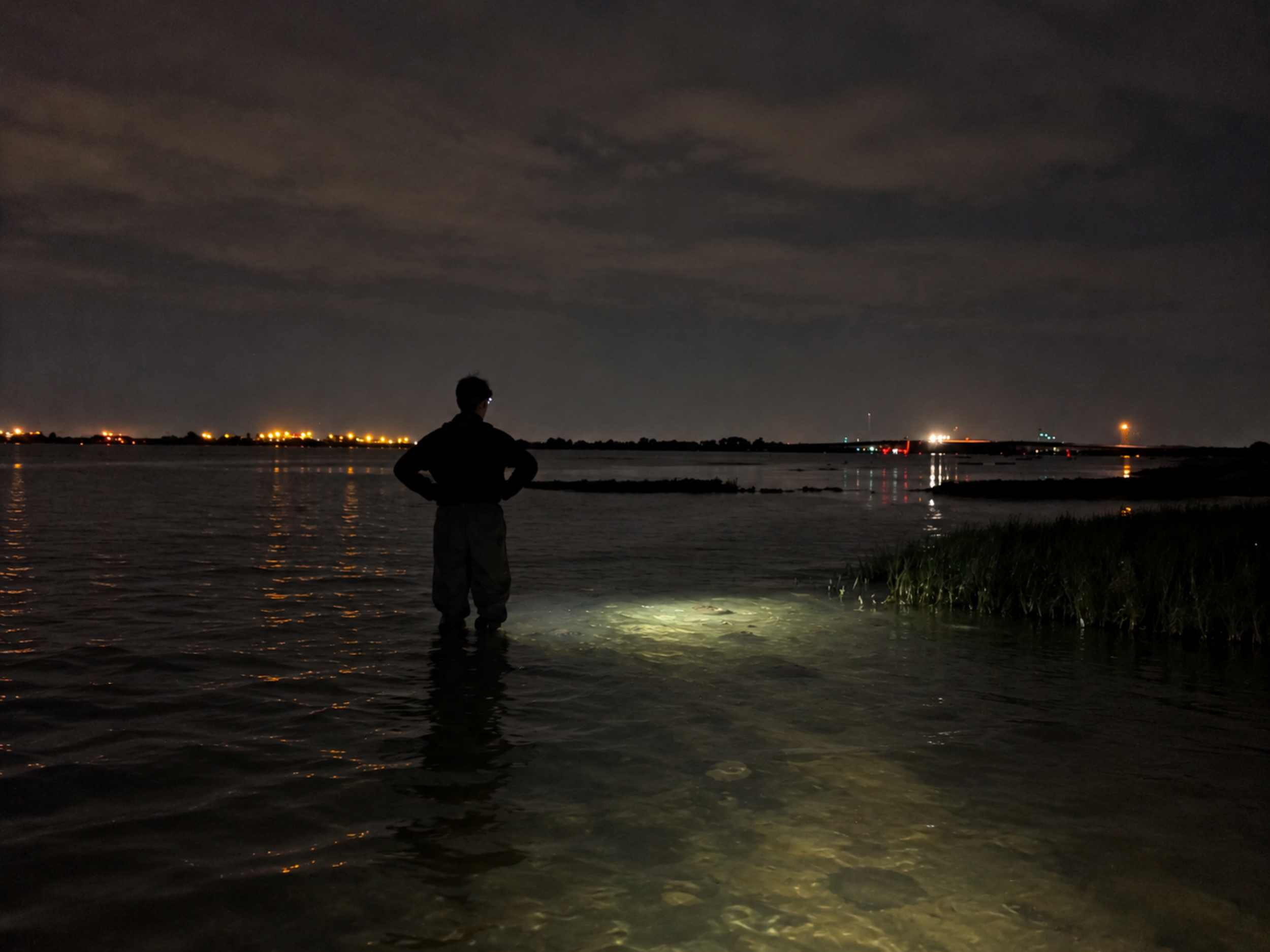
Liam at Jones Beach State Park | Horseshoe crab monitoring.
FIELDWORK
SOFO Sharks
Research Assistant | Summers 2025-2026
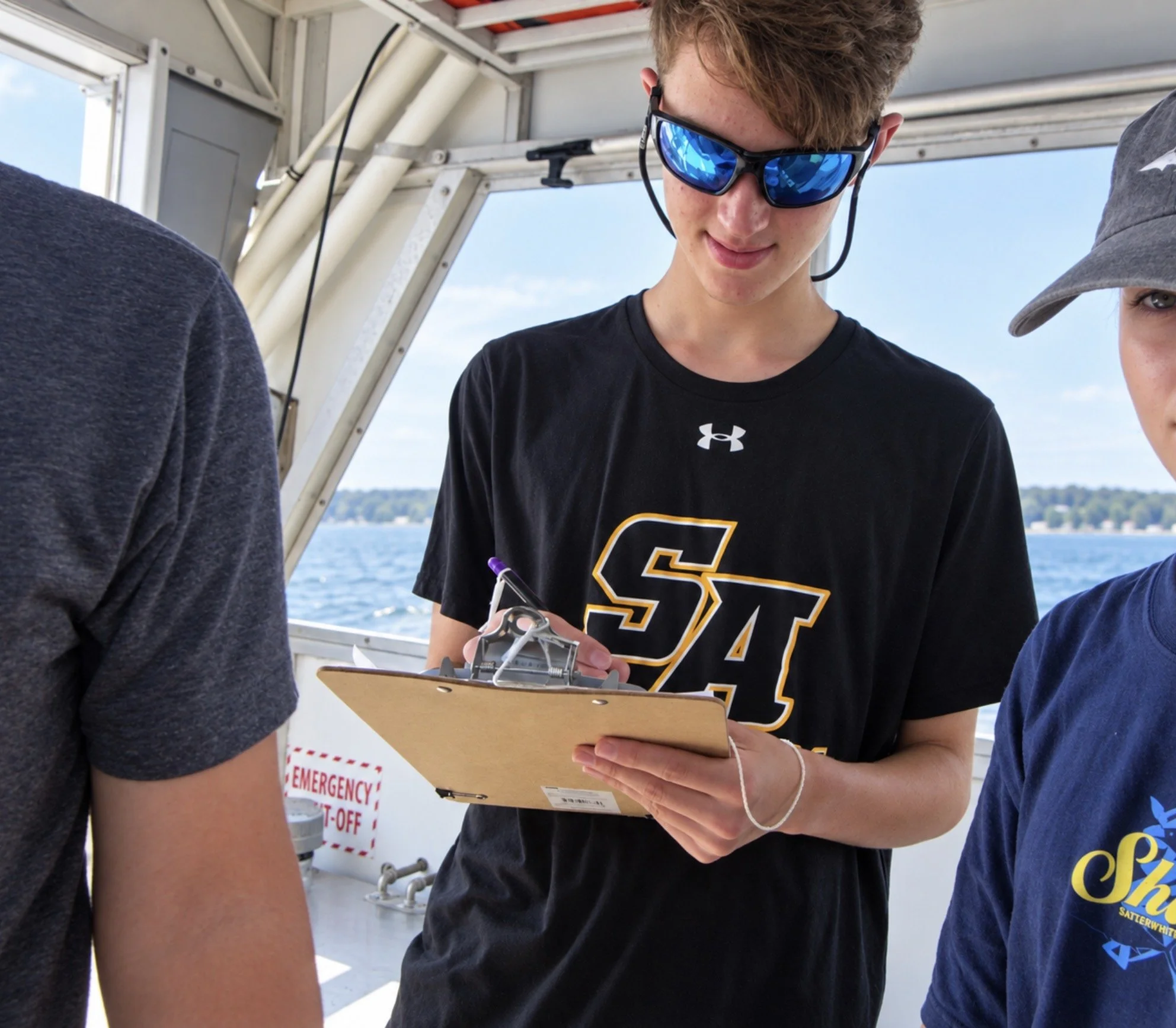
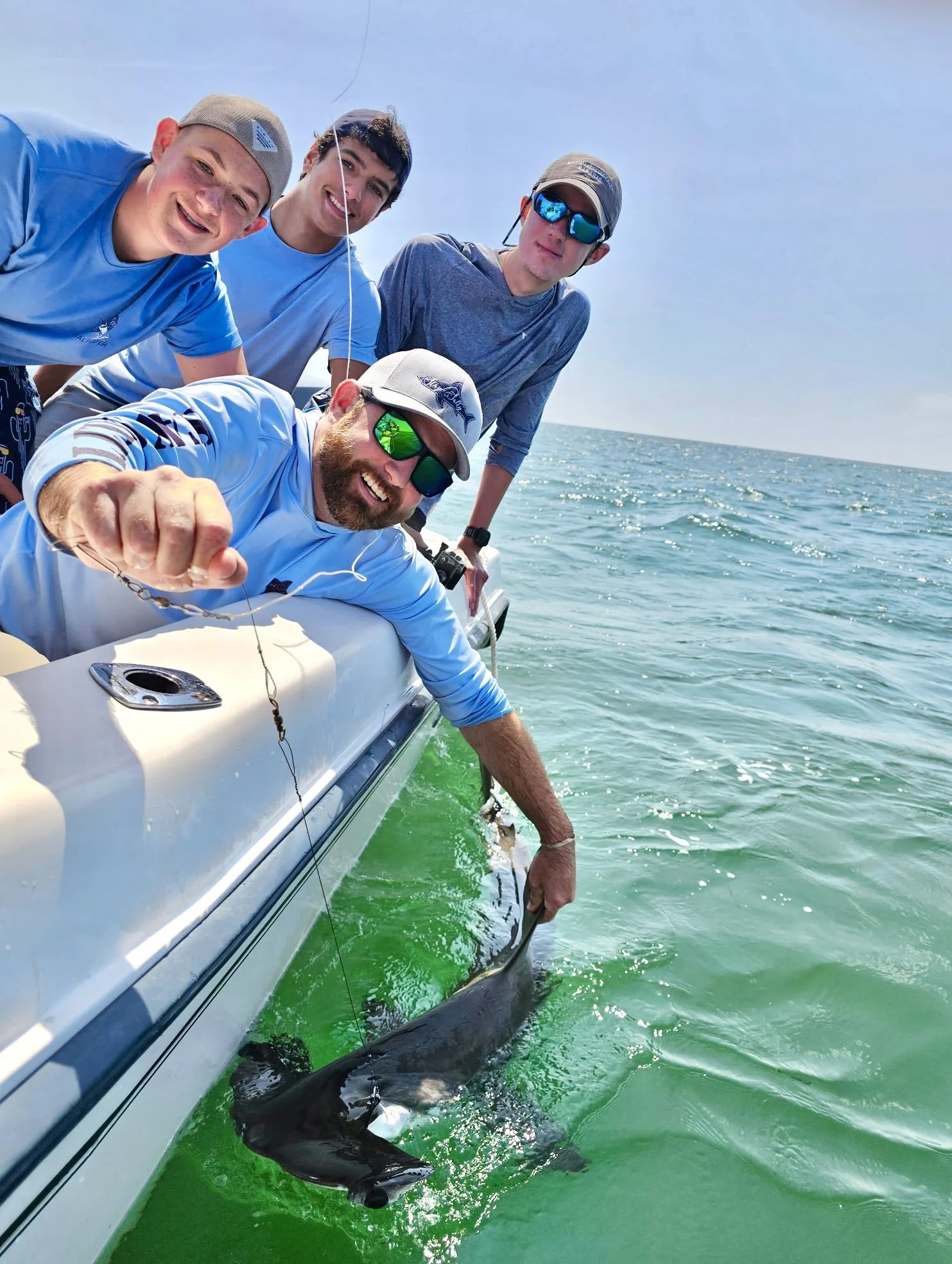
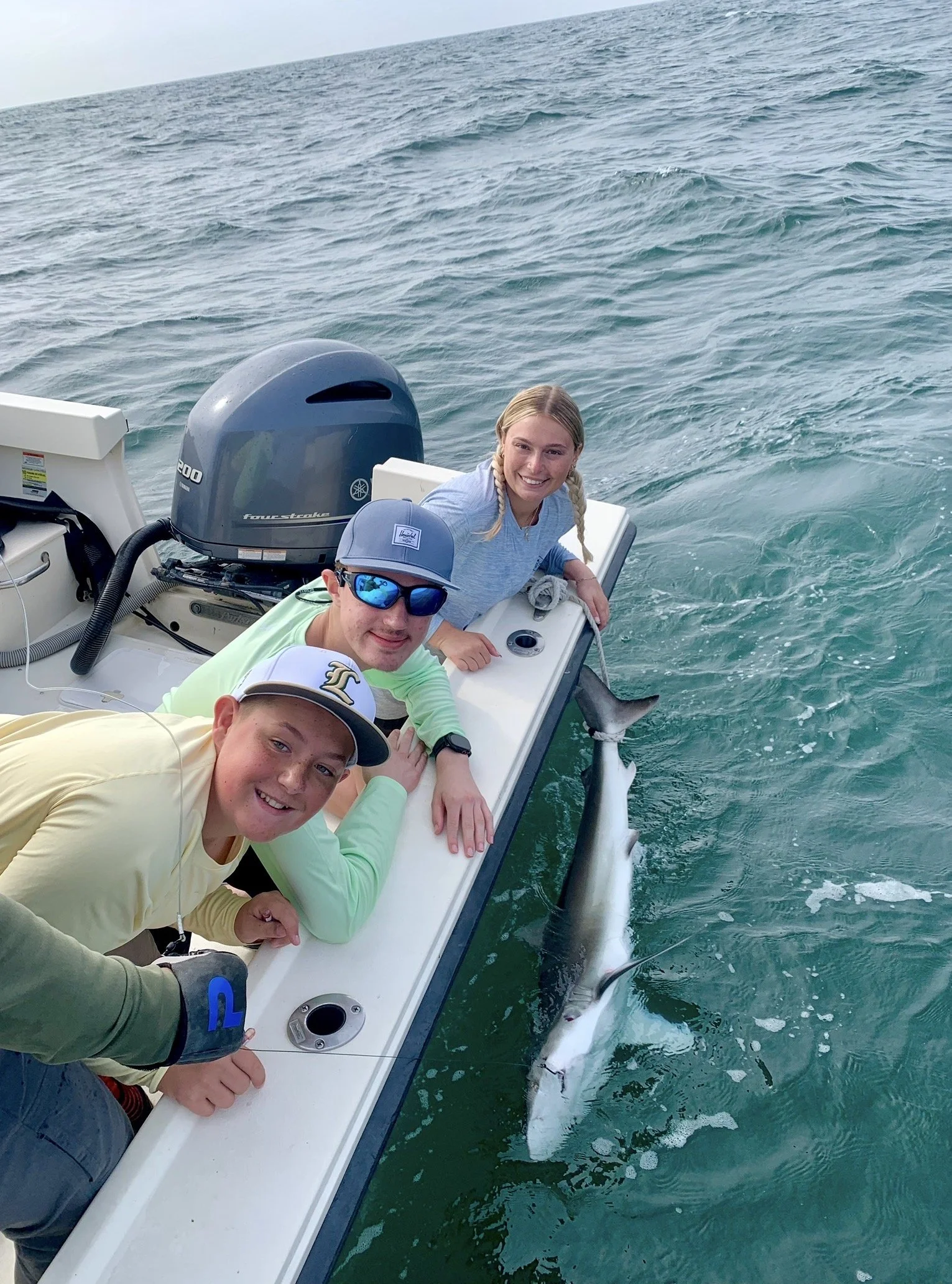
Two years ago, during a tour of Stony Brook University's marine science laboratory, I received some great advice about looking for opportunities to gain hands on field experience and getting involved with professional scientific organizations like the American Elasmobranch Society (AES). That advice led me to the South Fork Natural History Museum (SOFO) Sharks research program, where I spent two summers as a research assistant helping spot, tag, and collect data on sharks in Long Island's coastal waters.
I got to work with marine scientists and learn firsthand what goes into conducting research out on the water. My favorite part was spotting sharks from the boat, especially the challenge of picking them out in the water before anyone else noticed them.
The amazing scientists and mentors I met through SOFO Sharks and Stony Brook taught me that science sometimes takes a lot of patience, but what I remember most is how generous they were in sharing their knowledge with me and how they made me feel like I belonged on the team.
REACH Huntington-Northport Oyster Reef Project
Volunteer | 2023-2025
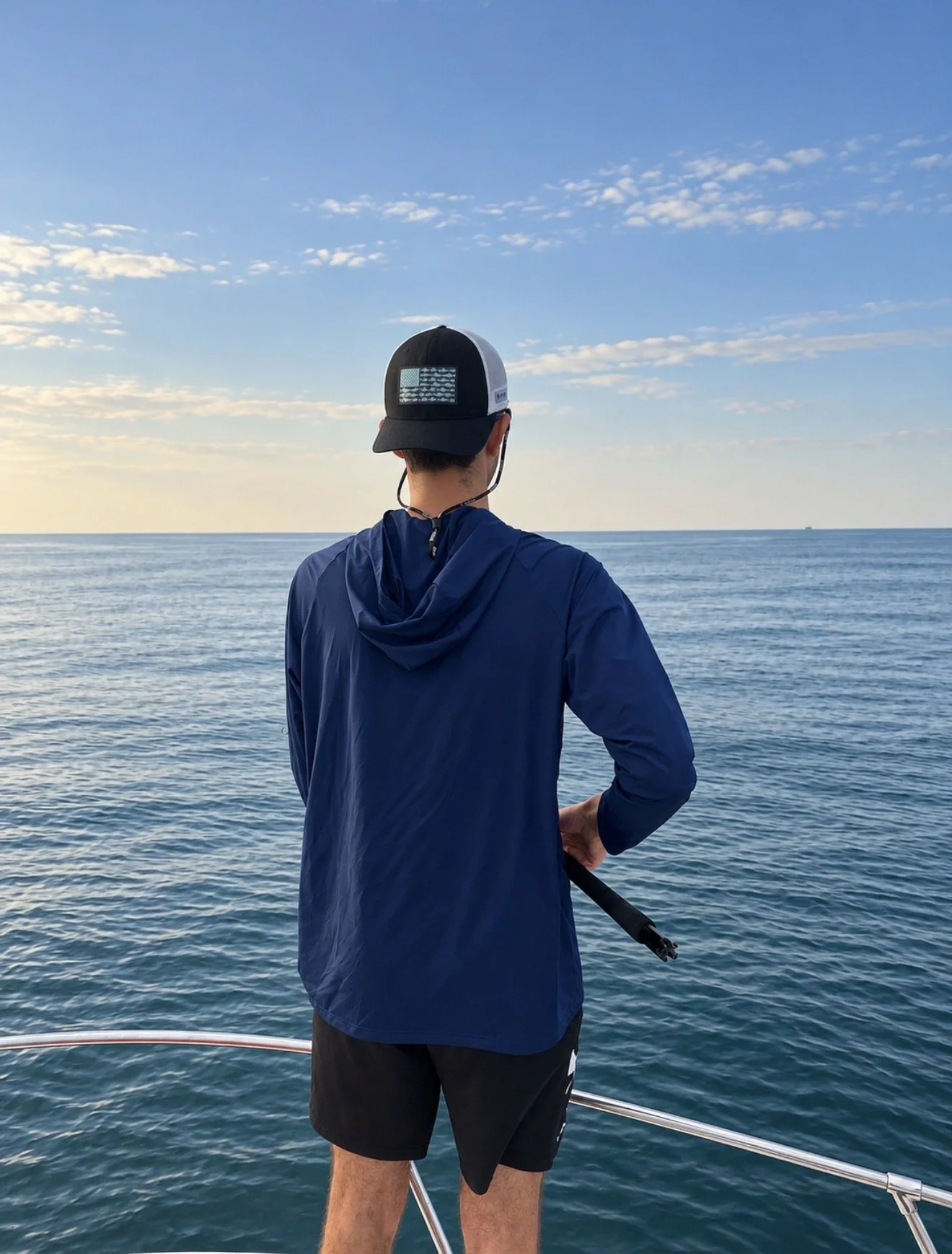
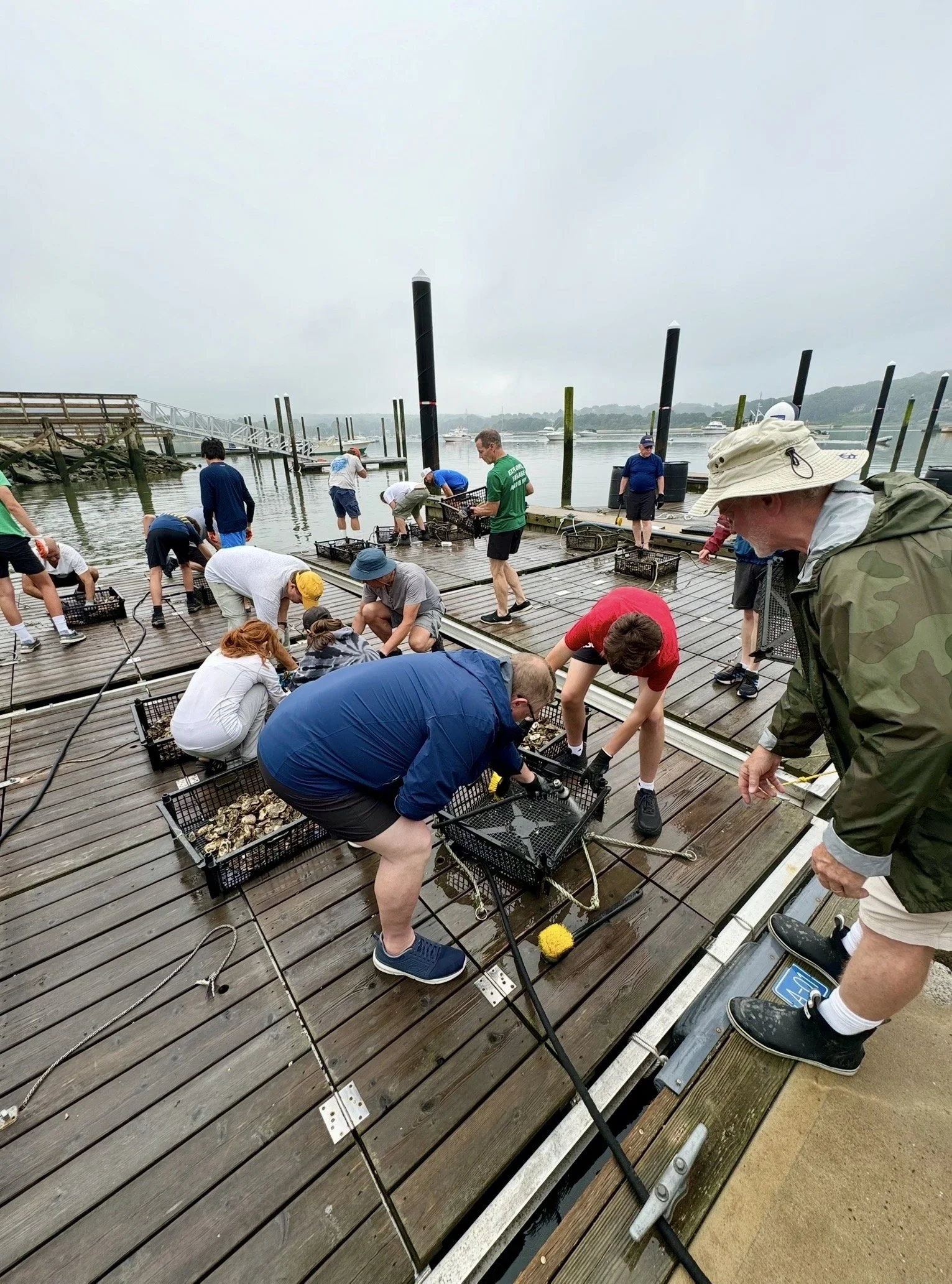
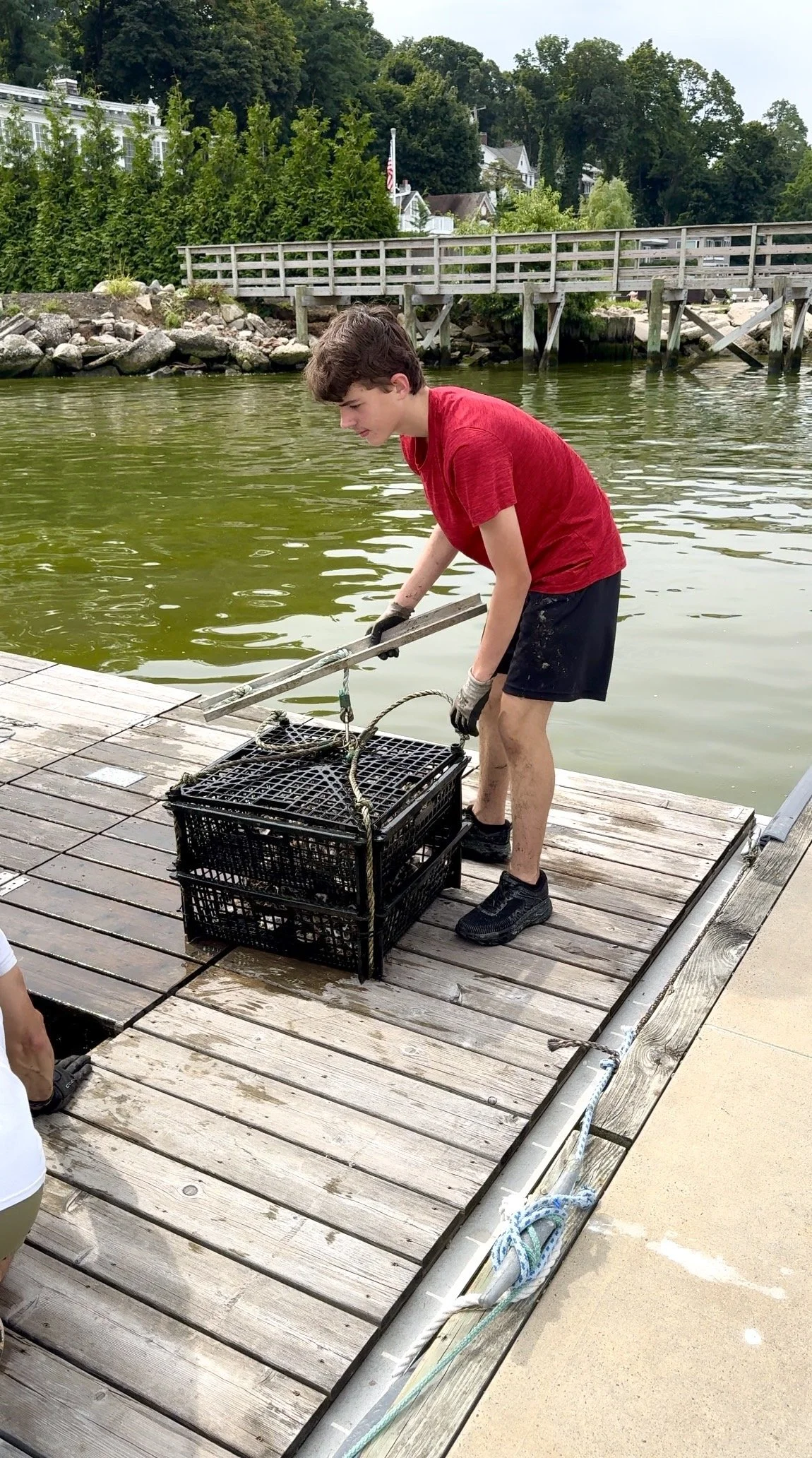
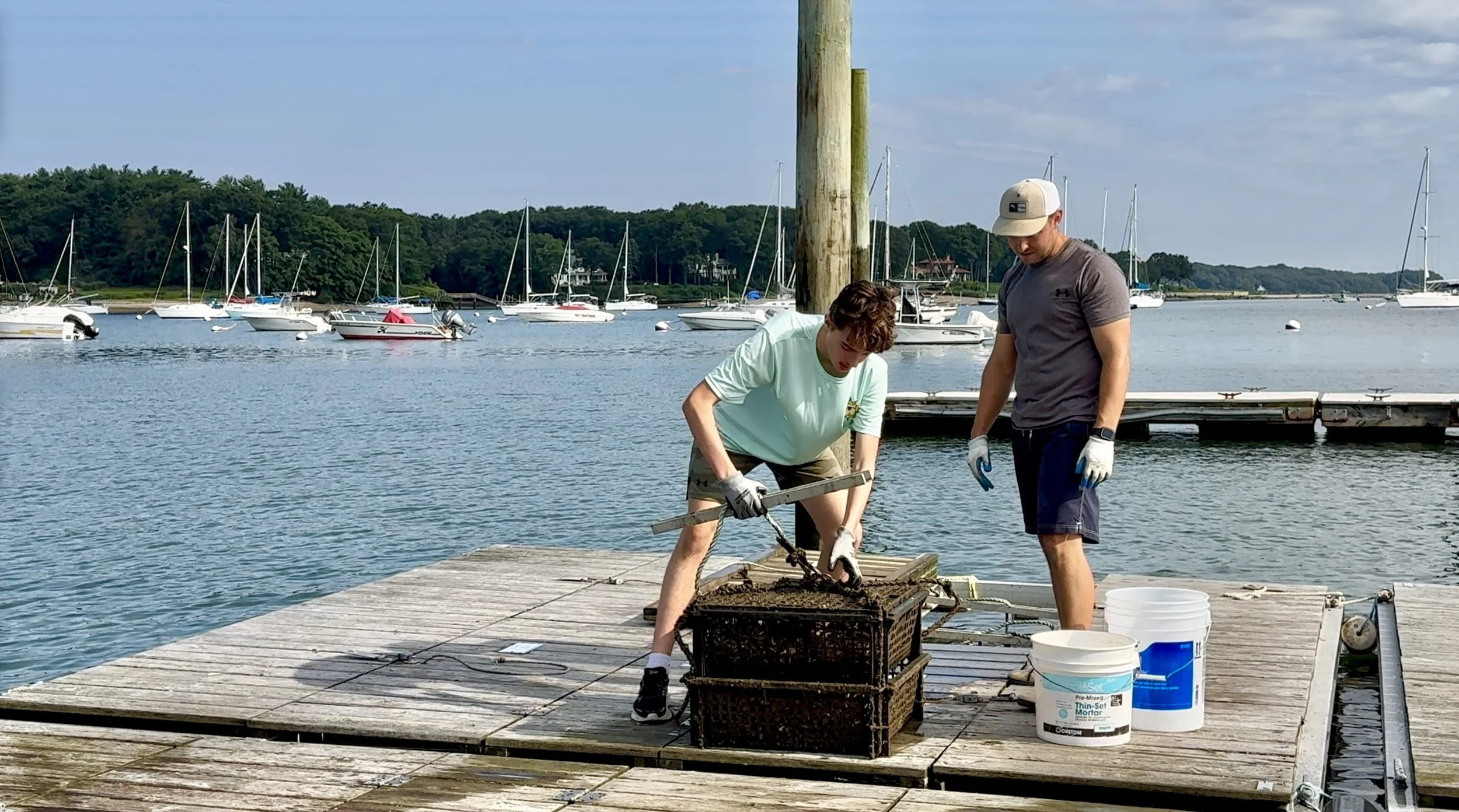
I spent multiple seasons volunteering with the Rotary Environmental Action Coalition of Huntington (REACH) Oyster Reef Restoration Project in Huntington and Northport Harbors. A lot of the work involved pulling heavy oyster trays out of the water, scrubbing and cleaning the trays and oysters, and collecting data on oyster growth. I've learned that marine science can get pretty dirty and sometimes the work is pretty physically demanding.
One of the most rewarding parts of coming back was seeing how much the oyster reef had grown over time. It's exciting to see how all those hours of cleaning, measuring, and collecting data contribute to something much bigger. This project has taught me that conservation takes patience and a lot of physical (and sometimes smelly) work, but getting to see the progress makes it worth it.
I also feel like I have to mention the people I've gotten to work with. Everyone was so willing to teach me, give me advice and encourage my interest in marine science. In fact, the idea for this website came from a professor from a local university I met on my first day volunteering in 9th grade. It's pretty cool to think that a conversation I had while cleaning oyster trays eventually turned into something like this.
REACH ROVers
Founding Student Member | 2024
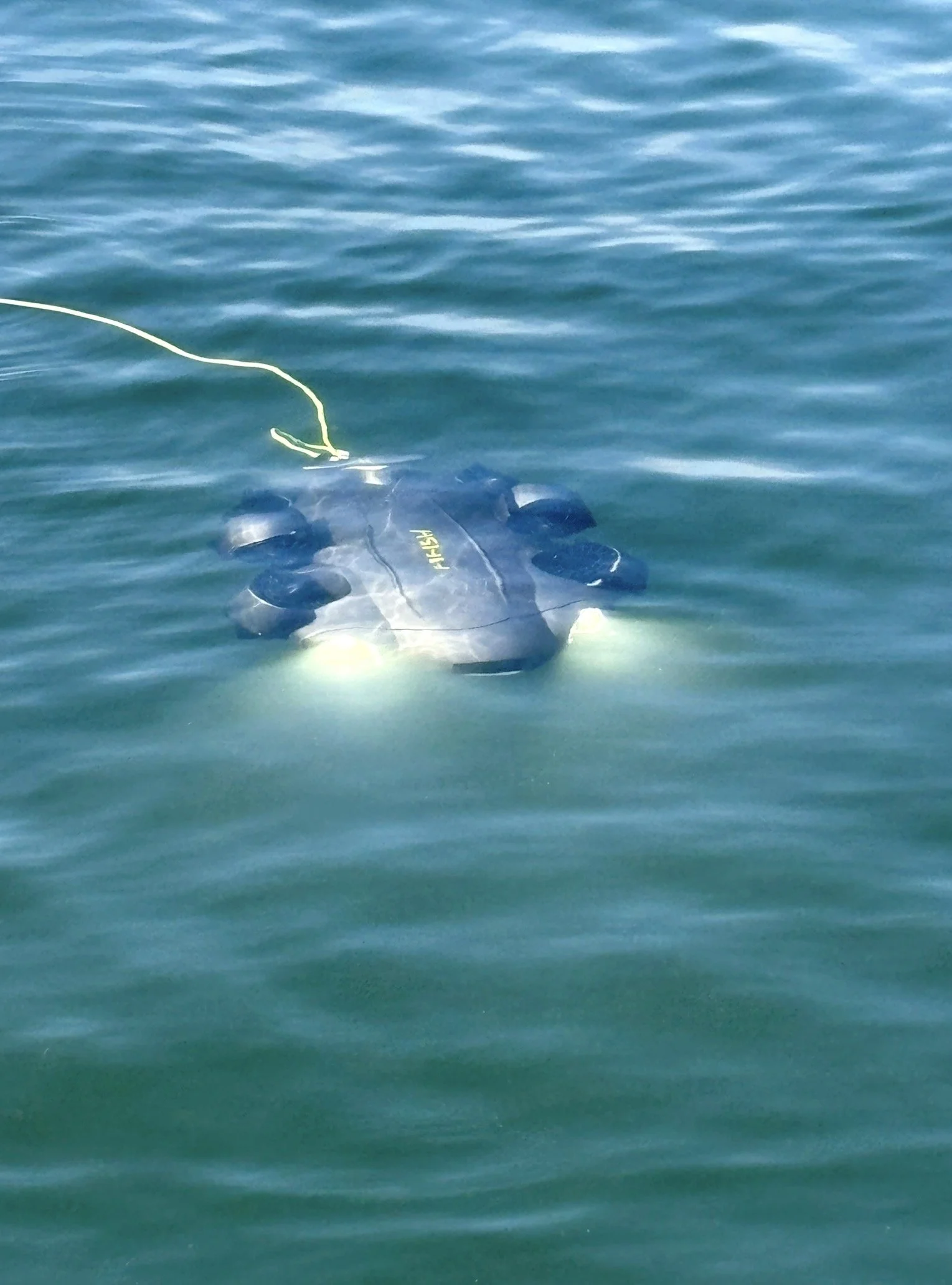
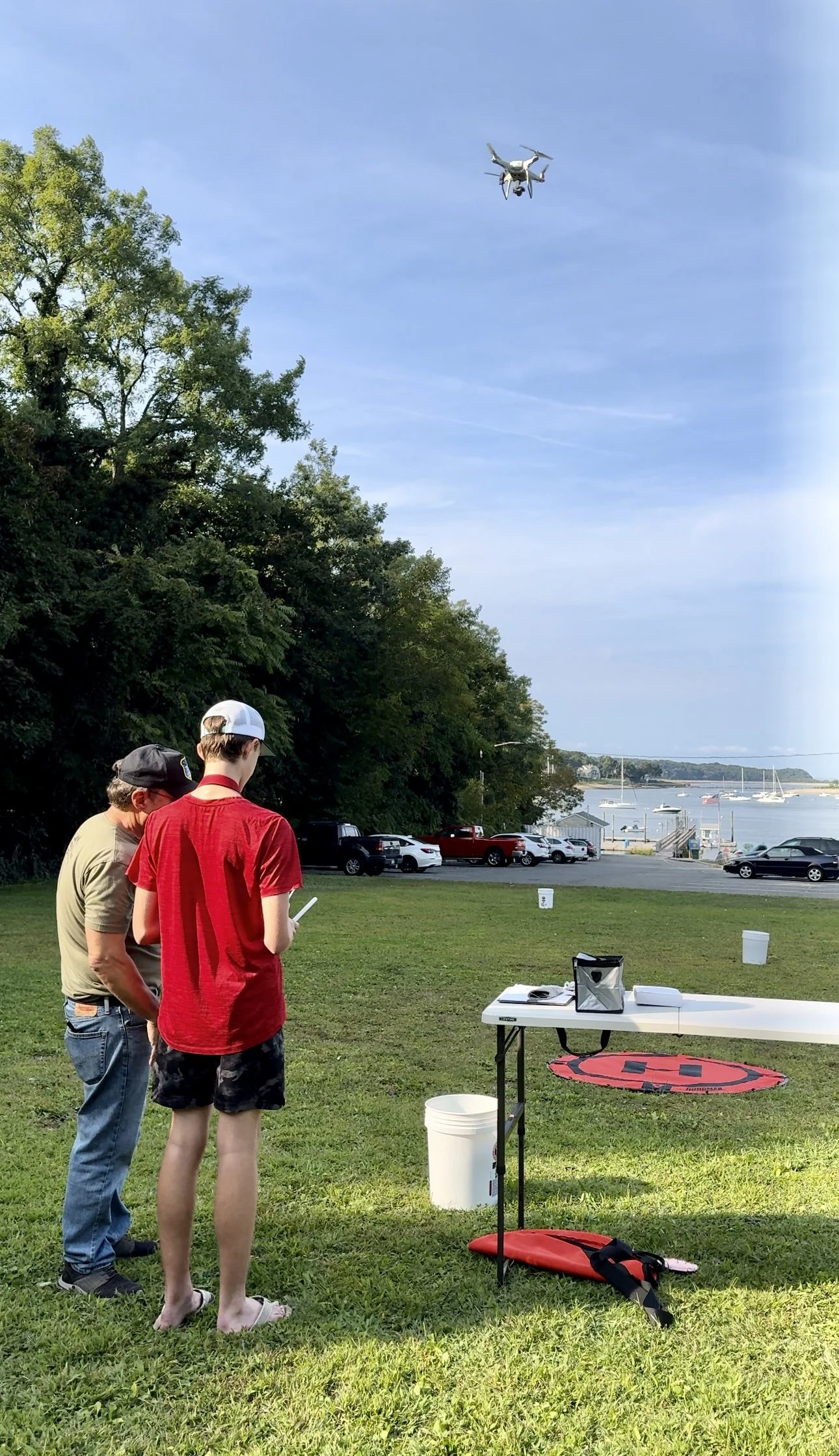
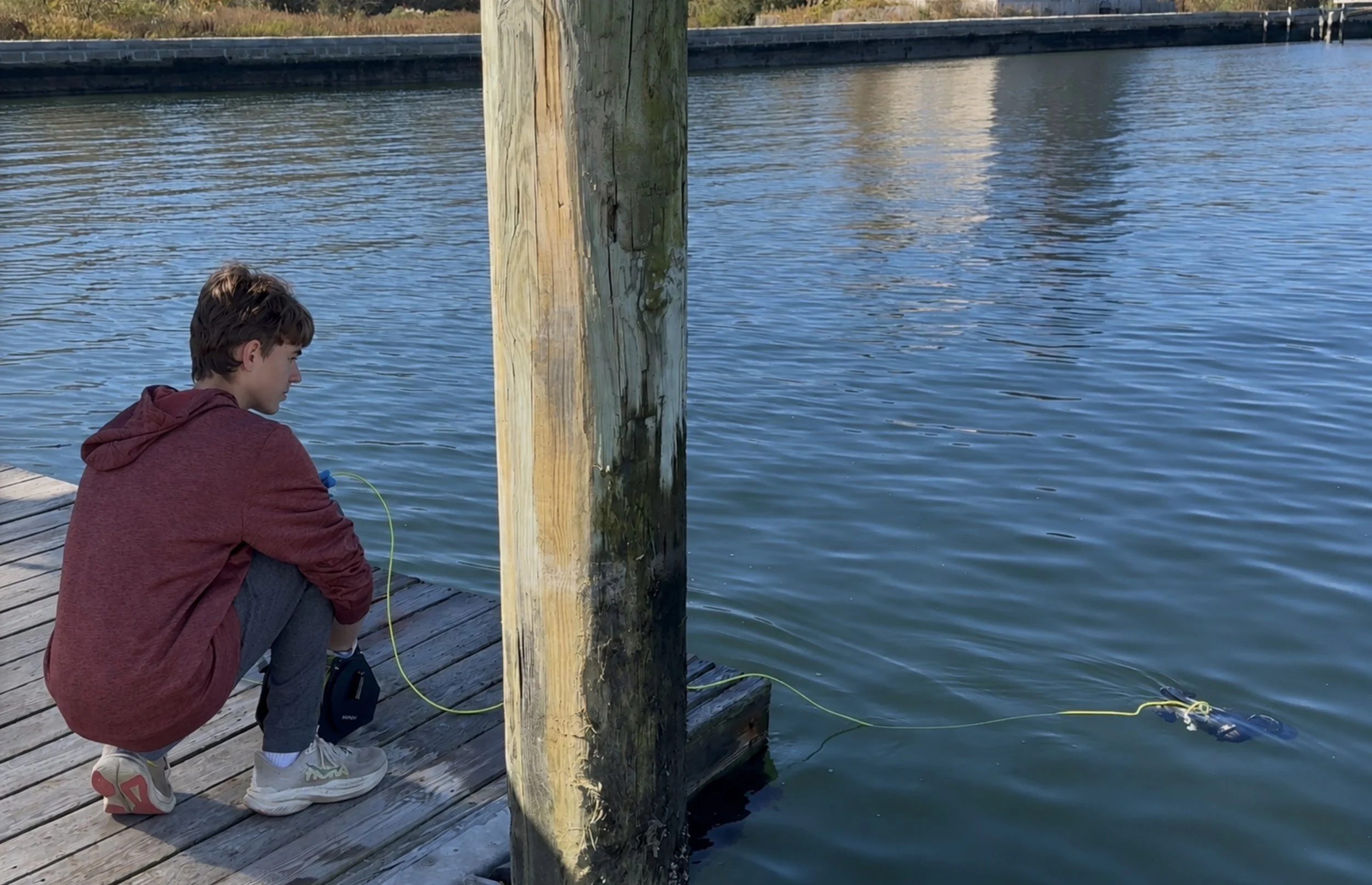
My involvement with the REACH Oyster Reef Project led to another opportunity when I was invited to become one of the first student members of the REACH ROVers team. Before learning to operate the underwater ROV (remotely operated vehicle), I started by training on an aerial drone. I really enjoyed learning how to pilot it, and that experience led to an interest in drones that eventually led me to earn my FAA Part 107 Remote Pilot Certificate.
Learning to operate an underwater ROV was a different challenge, but what started as an opportunity to help monitor oyster reefs introduced me to a whole new interest in drones and technology use in marine science. That interest also led me to explore Geographic Information Systems (GIS) and earn a certification using ArcGIS Pro. I never expected that volunteering with an oyster restoration project would open the door to so many new things.
NY Horseshoe Crab Monitoring Network
Volunteer | 2023-2025
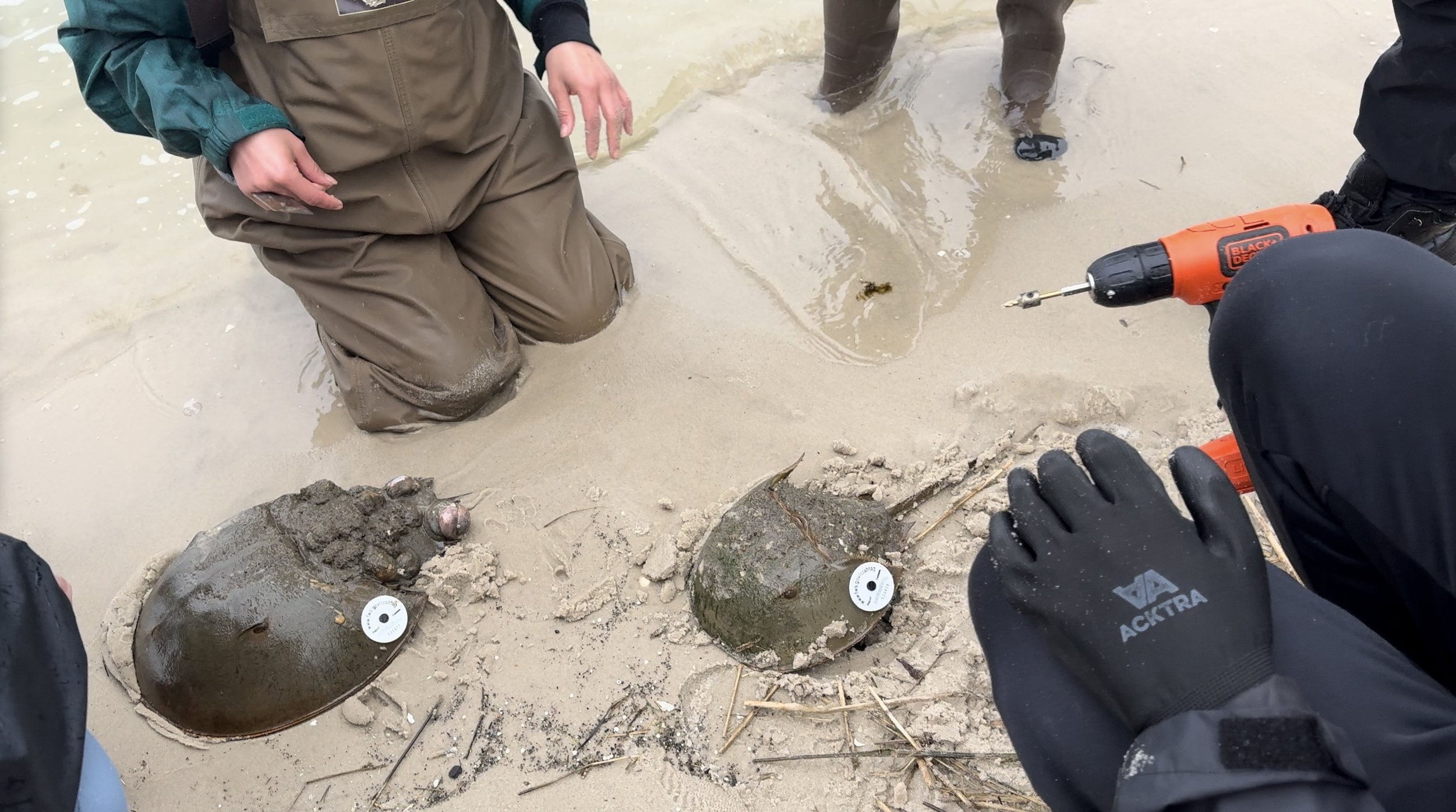
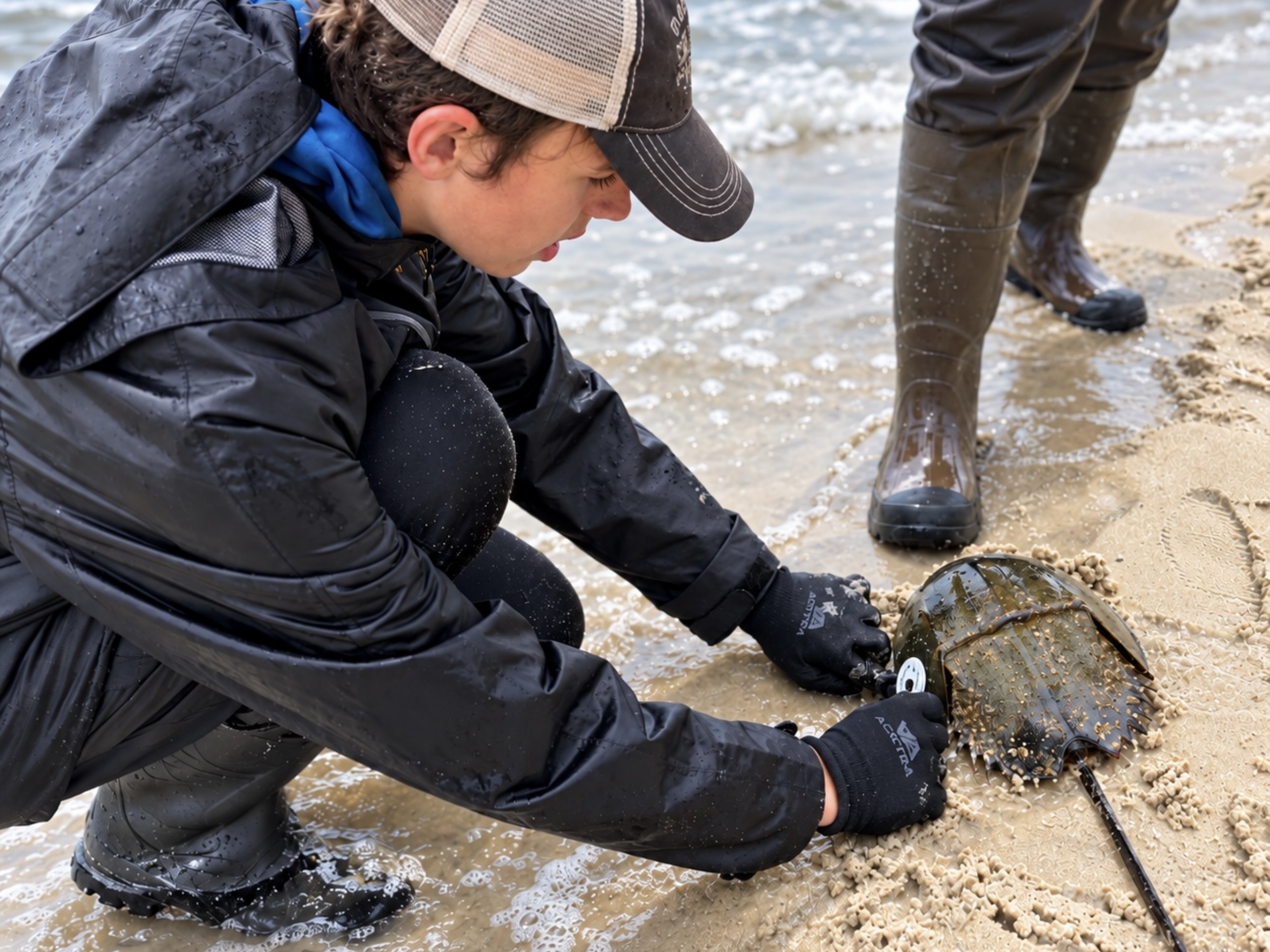
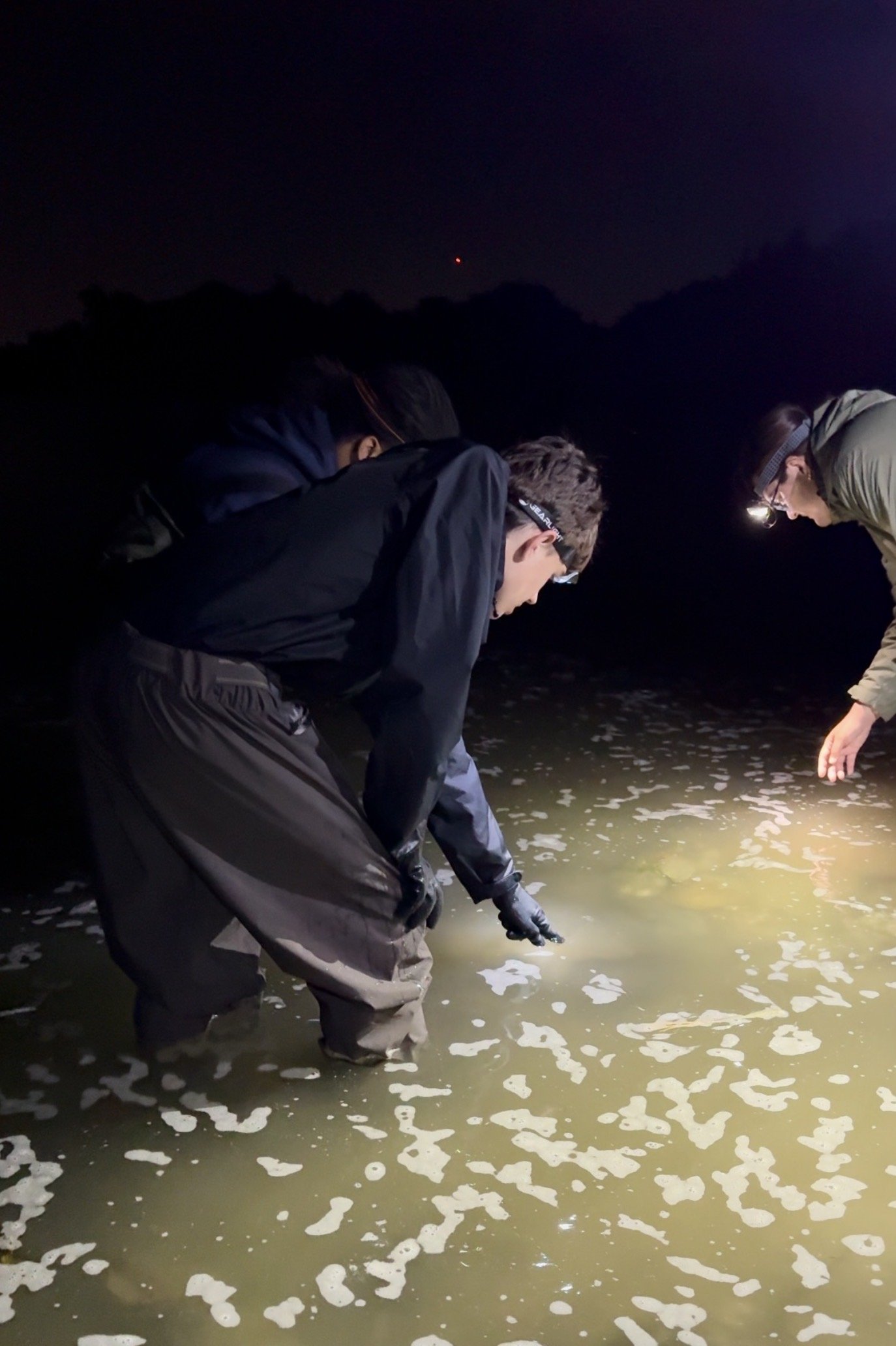
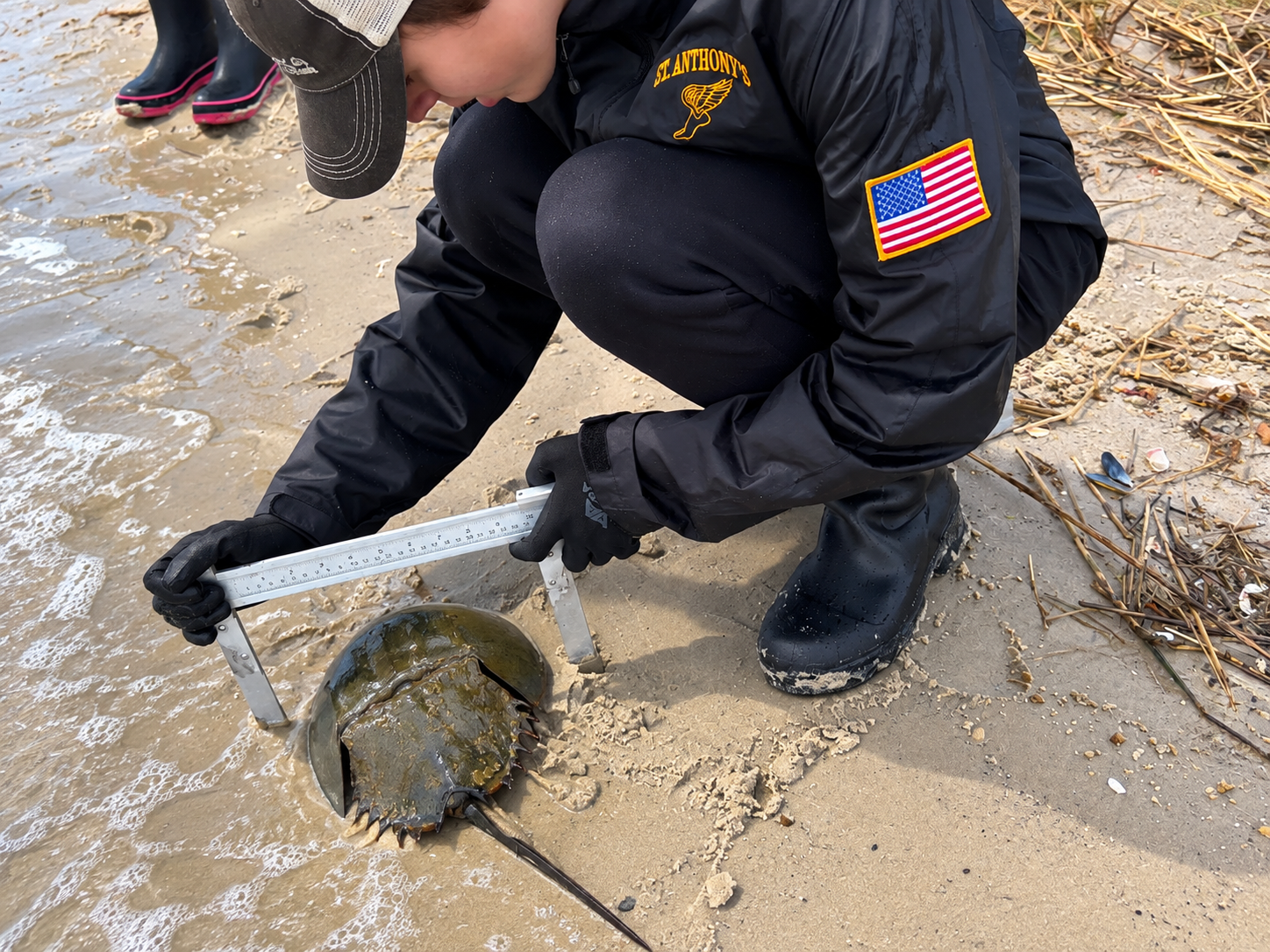
I spent multiple seasons volunteering with the New York Horseshoe Crab Monitoring Network, a program that is partnered with the NYS Department of Environmental Conservation (NYSDEC), Cornell Cooperative Extension, and Stony Brook University's School of Marine and Atmospheric Sciences (SoMAS).
The surveys took place at the Jones Beach Boat Basin where we tagged and measured horseshoe crabs and collected data to help researchers monitor the populations. Most of our surveys happened late at night and sometimes in the pouring rain. With the late hours, wet clothes, bugs, and mud, I learned pretty quickly that field science isn't always the fun stuff or the excitement of tagging a shark.
But there was something really cool about being out on the beach at night. Even on the nights when the weather was horrible, it was a pretty amazing place to be and I felt lucky to be there.
Stony Brook SoMAS Summer Courses
Student | Summers 2025-2026
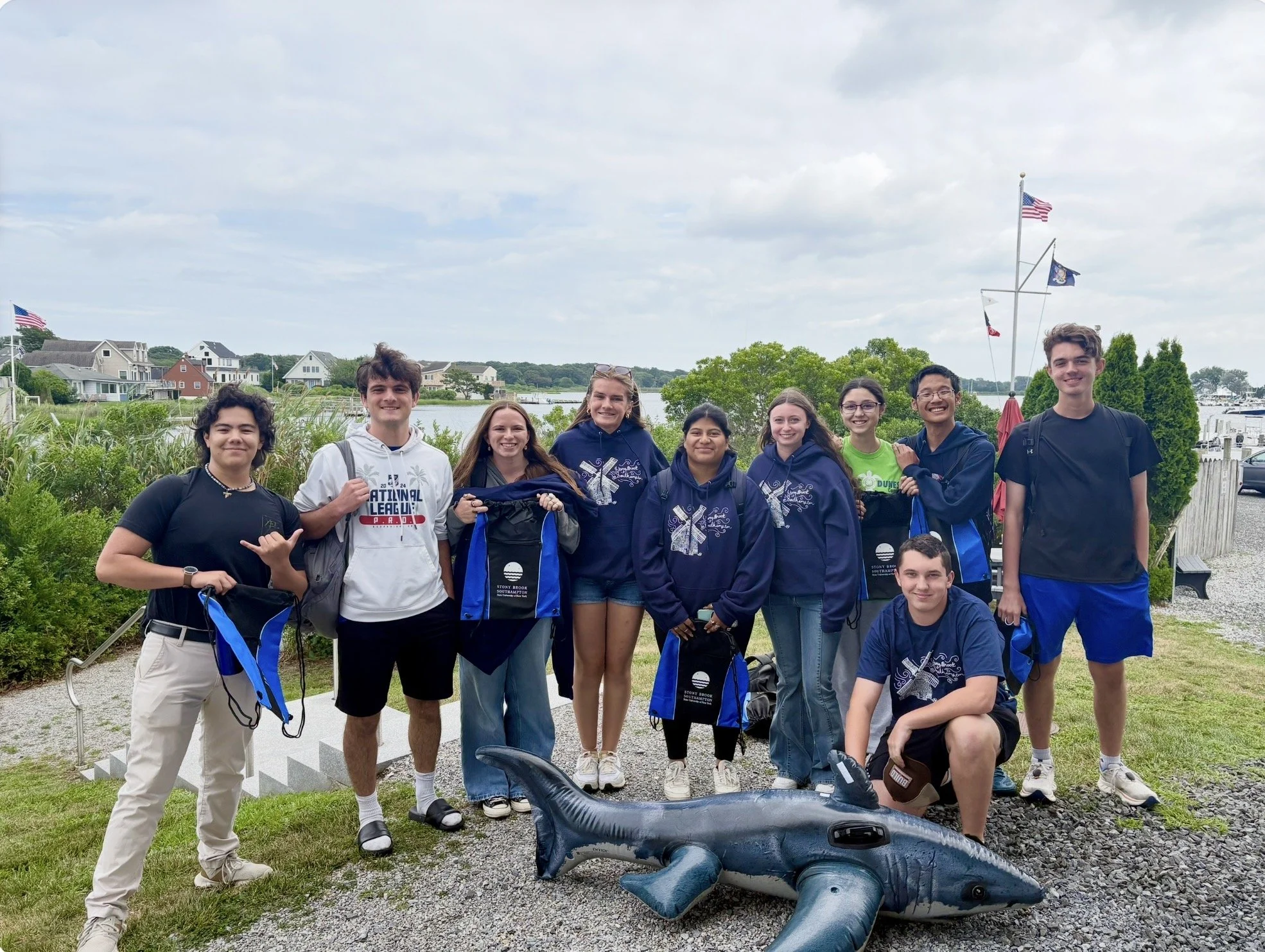
I've taken two summer marine science courses at Stony Brook University's Southampton campus: MAR 110: Shark Biology and Conservation (2025) and MAR 106: Marine Life in Our Ocean (2026).
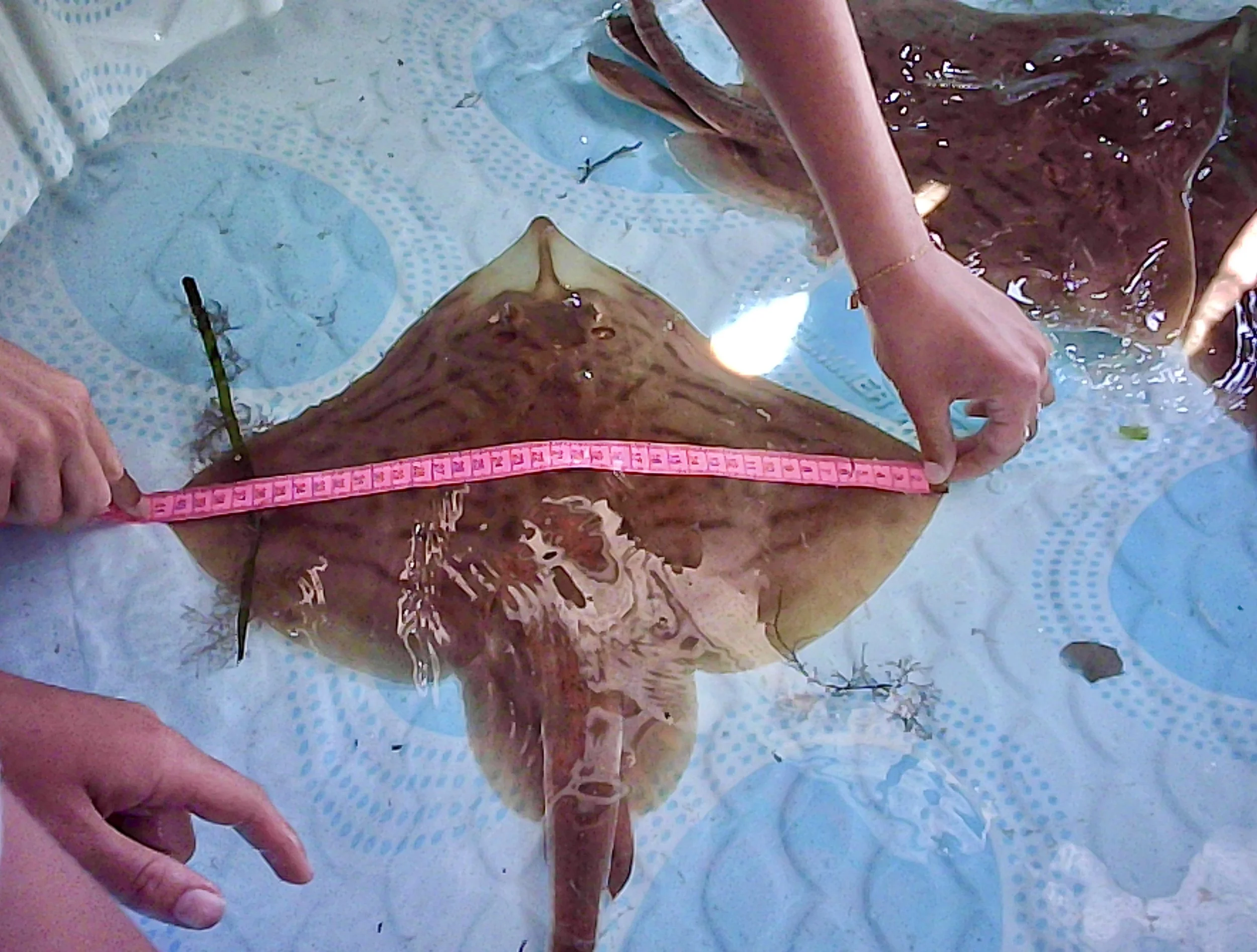
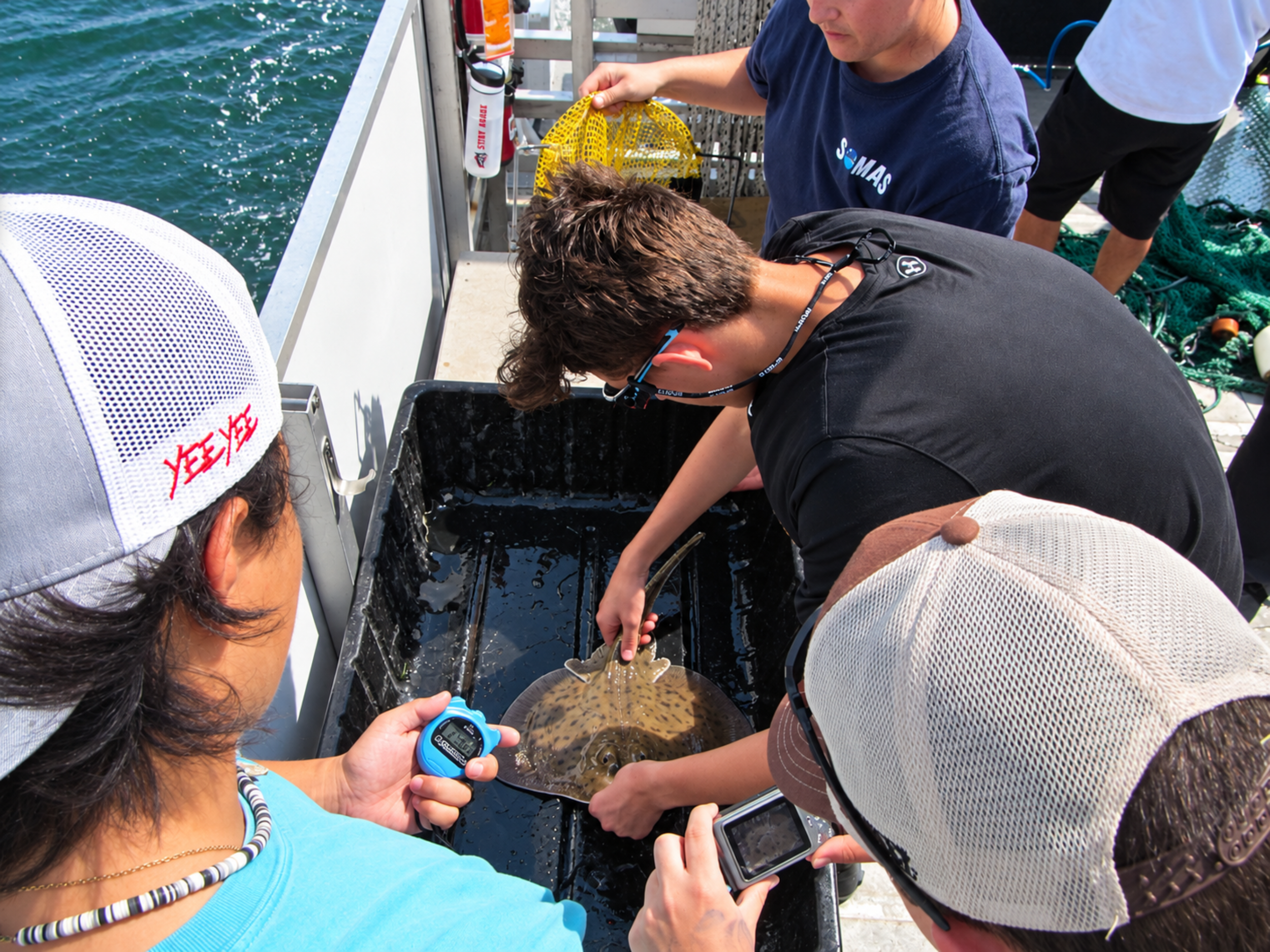
One of the best parts of these courses was getting out on the water and putting what we learned in the classroom into practice. We spent time on the research vessel making observations and collecting data. It was interesting to see how the things we discussed in class connected to what we were actually finding in the field.
I also spent two weeks living on campus during MAR 106, which gave me a chance to experience what studying marine science at a university might be like. Between the classes, the fieldwork, and the people I met, the experience made me even more excited about studying marine science in college and being part of a community.